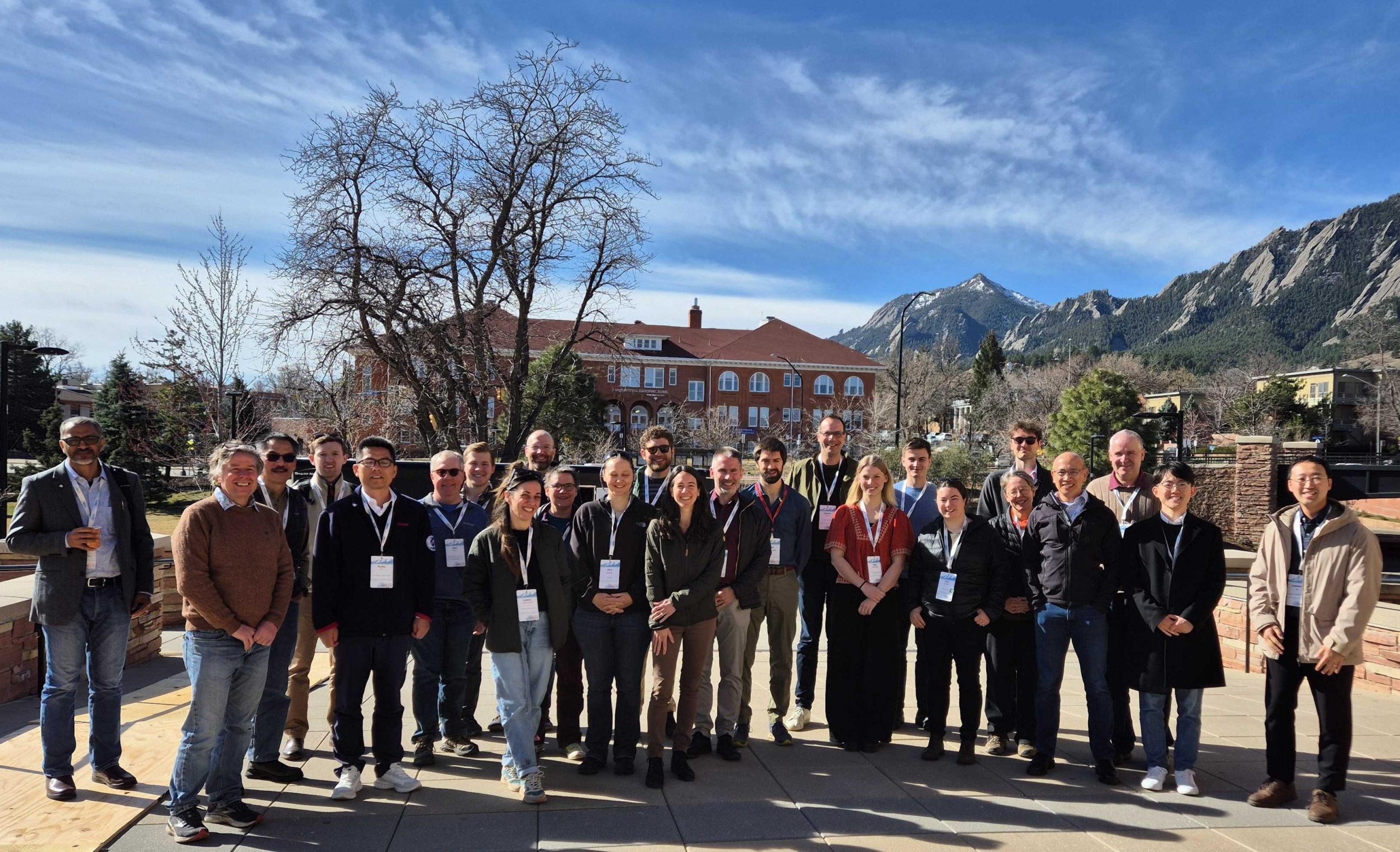
In 2025, ASIWG held an open meeting in Boulder, Colorado (USA) on 23 March as part of the Arctic Science Summit Week. Find the meeting agenda here.
Meeting Summary: This was the first open meeting since 2023 when the group met at the IGS Sea Ice Symposium in Bremerhaven. There were over 30 attendees, approximately 36% of which were Early Career Researchers (ECR). After an introduction, which included the presentation of new members of the working group, the morning sessions were dedicated to: (1) presentations and discussions on the lessons learned from the 4th International Polar Year (IPY) in 2007-2008 and future priorities and coordination opportunities for the sea ice community as planning begins for the 5th IPY in 2032-2033 (2) examples of joint sea ice modeling and observational activities and recommendations for better supporting joint activities in the future, and (3) novel applications of open science in the cloud, artificial intelligence, and machine learning for sea ice science. The afternoon session was focused on upcoming products, observing program updates, and observational opportunities to facilitate coordination and collaboration across the international sea ice community.
At the end of the workshop, there was a fruitful discussion that centered on recommendations and suggestions for future ASIWG activity priorities. The workshop collectively identified the need for a planning tool to help the broader Arctic science community learn about and coordinate with various upcoming field activities. There was discussion of the need for identifying linkages between the Arctic and Antarctic environments with respect to scientific similarities and their roles in the global climate, as well as practicalities in the standardization of observing methods for the 5th IPY between the Arctic and the Antarctic. This led to strong support from the workshop attendees for an updated edition of the Field Techniques for Sea Ice Measurements book (first edition edited by Hajo Eicken and others, issued in 2009), to help support 5th IPY field observational activities, which the ASIWG has agreed to undertake. There were also strong recommendations to revisit the World Meteorological Organization’s sea ice nomenclature given the vast changes in the Arctic sea ice state and the need for more language translations, as well as Indigenous knowledge input. A suggestion for supporting hackweeks to support specific science and data challenges was put forward as one of the activities that the ASIWG could also support in the coming years.
Overall, it was a successful meeting that enabled knowledge sharing of ideas for integrating observations with remote sensing and modelling efforts, fostered new connections between international groups, and created a path forward for developing measurement protocols for sea ice measurements in support of observing activities in the 5th IPY.