Ice Drilling Support NSF proposal deadline: 15 April 2013

The Ice Drilling Design and Operations (IDDO) group at the Ice Drilling Program Office (IDPO) reminds the community that proposals for the NSF 2013 Antarctic Research call (13-527 are due 15 April 2013. Researchers requiring ice drilling or ice coring support from IDDO must contact them at least six weeks prior to the deadline, by 4 March 2013.

A Field Project Support Requirements form is available on the IDPO/IDDO website (http://www.icedrill.org/scientists/scientists.shtml), and must be completed and emailed to IDPO/IDDO (icedrill@dartmouth.edu). Upon receipt of the form, IDPO/IDDO will provide a cost estimate and a letter of support that must be included with your proposal.

For more information about requesting ice drilling support, please
visit: http://www.icedrill.org/scientists/scientists.shtml.

For information and ideas about partnering with the Ice Drilling Program Office for broader impacts, please visit: http://www.icedrill.org/scientists/outreach_support.shtml.

Continue ReadingIce Drilling Support NSF proposal deadline: 15 April 2013

Deadline: Wednesday, 9 January 2013 for Nominations Workshop Committee Opportunities to Use Remote Sensing in Understanding Permafrost and Ecosystems U.S. National Research Council

The National Research Council (NRC) announces a call for nominations, seeking members for an ad hoc committee that will organize a new NRC activity, "Opportunities to Use Remote Sensing in Understanding Permafrost and Ecosystems: A Workshop."

A committee of experts will plan the workshop to explore opportunities for using remote sensing to advance our understanding of permafrost status and trends and the impacts of permafrost change, especially on ecosystems and the carbon cycle in the high latitudes. The workshop discussions will be designed to encourage attendees to articulate gaps in current understanding and potential opportunities to harness remote sensing techniques to better understand permafrost, permafrost change, and implications for ecosystems in permafrost areas. The committee will write a report that summarizes the workshop discussions.

The committee of 8-9 members will meet numerous times by conference call to plan the workshop structure, identify appropriate speakers and attendees, and develop background materials for attendees. Committee members will lead the workshop and serve as session facilitators. The committee will remain for an extra day after the public workshop to summarize the discussions and begin preparing the workshop report.

The committee will need expertise in a range of areas: permafrost, high latitude ecosystems, remote sensing technologies (e.g., LIDAR, hyperspectral, optical, radar, InSAR, thermal infrared, airborne resistivity), climate change, hydrology, vegetation, geomorphology, and snow science. To submit a nomination, please email Rob Greenway (rgreenway@nas.edu) with the person's name, affiliation, contact information, area of expertise, and a brief statement on why the person is relevant to the study topic.

Continue ReadingDeadline: Wednesday, 9 January 2013 for Nominations Workshop Committee Opportunities to Use Remote Sensing in Understanding Permafrost and Ecosystems U.S. National Research Council

Deadline April 15 for the International Conference “Earth Cryology: XXI century”

The Scientific Council on Earth Cryology, Russian Academy of Science and Earth Cryosphere Institute invites you to Pushchino, Russia from September 22 to 25, 2013.

The main topics of the conference will be:
  • Mountain and volcanic permafrost
  • Subsea permafrost
  • Subglacial permafrost
  • Permafrost processes
  • Permafrost modelling and mapping
  • Constructions on frozen ground
  • Permafrost microbiology and astrobiology
  • Permafrost dating and paleoreconstructions
  • Permafrost-affected soils and biosystems
  • Permafrost biogeochemistry
  • Permafrost hydrology and hydrogeology
  • Permafrost long-term monitoring
  • Constructions on frozen ground

If you are interested in being a chair of the section, or have an idea to add an extra one - they are open for disscussion.

Several roundtables will be organized: Antarctic permafrost and soils (ANPAS), TSP, CALM, Antarctic and mountain permafrost, palaeoreconstructions, PYRN.

The deadline for Registration is April 15, 2013

The congress language is English.

Detailed information on the Conference and forms for registration and abstract submission will be available at  www.cryosol.ru/publ/kalendar_konferencij/earth_cryology_xxi_century/1-1-0-5 after January 10, 2013.
For any questions e-mail- Permaconf2013@gmail.com

Continue ReadingDeadline April 15 for the International Conference “Earth Cryology: XXI century”

Discussion on Arctic climate change at COP 18

On December 6 in Doha, as the COP 18 climate change negotiations switched gears for the finale, the Swedish Chairmanship of the Arctic Council arranged a side event on climate change in the Arctic. The event was held against the background of the rapid and ominous development lately in the Arctic, in particular the past summer's sea ice melt. The event was well attended and a strong panel including Martin Lidegaard, climate and energy minister of Denmark, Jens Fredriksen, Minister for housing, infrastructure and transport from Greenland, and Lena Ek, Swedish Minister for the Environment, contributed to a lively discussion.

Continue ReadingDiscussion on Arctic climate change at COP 18

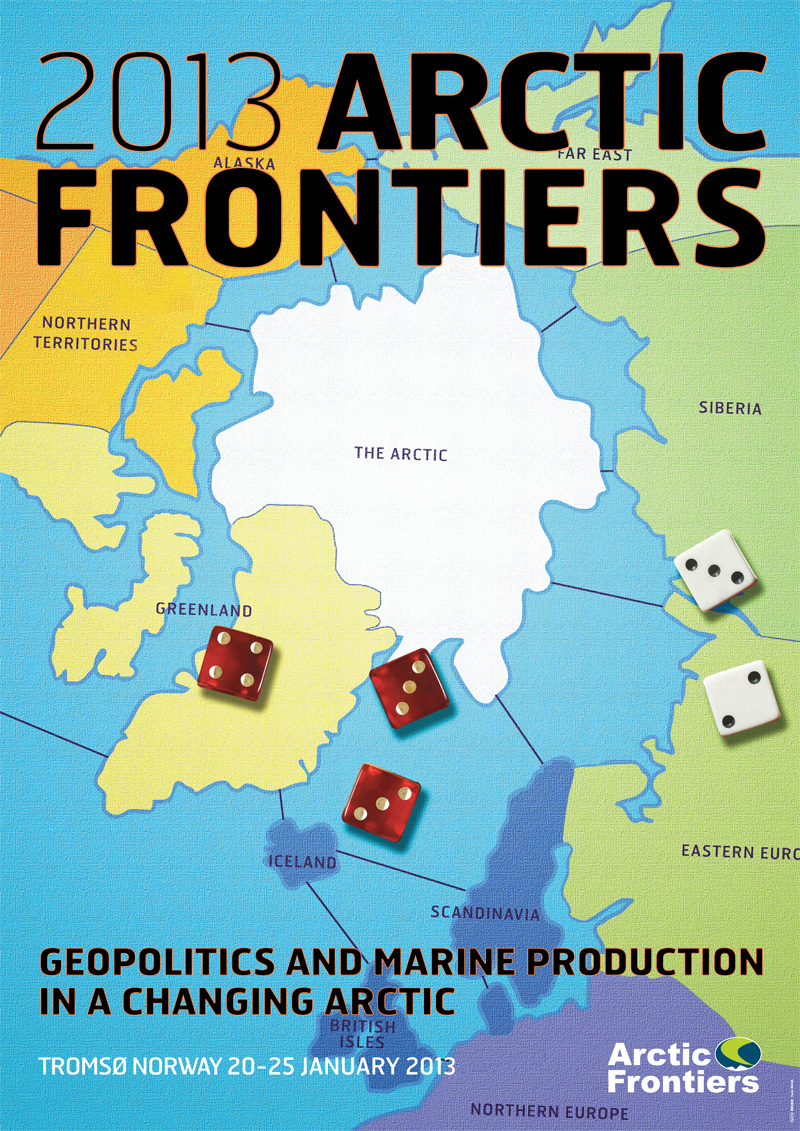
Arctic Frontiers program online now


Arctic Frontiers 2013 will be held at the University of Tromsø, Norway from Sunday 20 to Friday 25 January 2013. The theme of the conference is 'Geopolitics and Marine Production in a Changing Arctic'. The policy section will run for the first two days (Monday 21 and Tuesday 22 January 2013) followed by three days of science (Wednesday 23 January to Friday 25 January). The science section will have three parts:
  •   Geopolitics in a Changing Arctic
  •   Marine harvesting in the Arctic
  •   Arctic Marine Productivity 
The program online here: https://arcticfrontiers.conference-services.net/programme.asp?conferenceID=3325&language=en-uk

    Continue ReadingArctic Frontiers program online now

    Palaeoenvironments and palaeoceanography changes across the Jurassic/Cretaceous boundary in the Arctic realm: case study of the Nordvik section (north Siberia, Russia)

    The Jurassic/Cretaceous transition was accompanied by significant changes in palaeoceanography and palaeoenvironments in the Tethyan Realm, but outside the Tethys such data are very scarce. Here we present results of a study of the most complete section in the Panboreal Superrealm, the Nordvik section. Belemnite δ18O data show an irregular decrease from values reaching up to +1.6‰ in the Middle Oxfordian and from +0.8 to −1.7‰ in the basal Ryazanian, indicating a prolonged warming. The biodiversity changes were strongly related to sea-level oscillations, showing a relatively low belemnite and high ammonite diversity during sea-level rise, accompanied by a decrease of the macrobenthos taxonomical richness. The most prominent sea-level rise is marked by the occurrence of open sea ammonites with Pacific affinities. Peak abundances of spores and prasinophytes correlate with a negative excursion in organic carbon δ13C near the J/K boundary and could reflect blooms of green algae caused by disturbance of the marine ecosystem.

    Keywords: Biodiversity; stable isotopes; J/K boundary; Arctic Realm; palaeoceanography

    (Published: 25 March 2014)

    Citation: Polar Research 2014, 33, 19714, http://dx.doi.org/10.3402/polar.v33.19714

    Continue ReadingPalaeoenvironments and palaeoceanography changes across the Jurassic/Cretaceous boundary in the Arctic realm: case study of the Nordvik section (north Siberia, Russia)

    Selected elements in surface waters of Antarctica and their relations with the natural environment

    The aim of the study was to specify the concentration of selected chemical elements in surface waters of King George Island, off the western coast of the Antarctic Peninsula. The research encompassed six streams, a lake and an artificial water reservoir located on the western coast of Admiralty Bay. Measured hydrochemical parameters included pH, conductivity, total dissolved solids (TDS), and total and dissolved forms elements such as Al, Co, Ni, Cu, Zn, Cd, Pb, Mn, Fe, As and Se. The values of pH, conductivity and TDS had the following ranges: 6.09–8.21, 6.0–875 µS cm−1 and 7.0–975 mg/L, respectively, and were typical for surface waters of Antarctica. Wide disparities were discovered regarding concentrations of the investigated elements, ranging from <0.01 µg/L for Cd to 510 µg/L for Fe, and differing from one water body to another. The investigated elements are discussed with reference to environmental conditions and anthropogenic factors. Concentrations of total and dissolved forms of elements are considered in connection with the composition of soil in their surroundings and with atmospheric deposition, mostly such as that took place locally. The increased levels of Pb and Zn concentrations in the immediate proximity of a research station suggested anthropogenic contamination.

    Keywords: Antarctic surface waters; total and dissolved elements; baseline elements values; anthropogenic metal contamination

    (Published: 21 March 2014)

    To access the supplementary material for this article, please see Supplementary files in the column to the right (under Article Tools).

    Citation: Polar Research 2014, 33, 21417, http://dx.doi.org/10.3402/polar.v33.21417

    Continue ReadingSelected elements in surface waters of Antarctica and their relations with the natural environment

    Complete breeding failures in ivory gull following unusual rainy storms in North Greenland

    Natural catastrophic events such as heavy rainfall and windstorms may induce drastic decreases in breeding success of animal populations. We report the impacts of summer rainfalls on the reproductive success of ivory gull (Pagophila eburnea) in north-east Greenland. On two occasions, at Amdrup Land in July 2009 and at Station Nord in July 2011, we observed massive ivory gull breeding failures following violent rainfall and windstorms that hit the colonies. In each colony, all of the breeding birds abandoned their eggs or chicks during the storm. Juvenile mortality was close to 100% at Amdrup Land in 2009 and 100% at Station Nord in 2011. Our results show that strong winds associated with heavy rain directly affected the reproductive success of some Arctic bird species. Such extreme weather events may become more common with climate change and represent a new potential factor affecting ivory gull breeding success in the High Arctic.

    Keywords: Pagophila eburnea; breeding failure; Greenland; endangered species; summer precipitation; climate change.

    (Published: 13 March 2014)

    Citation: Polar Research 2014, 33, 22749, http://dx.doi.org/10.3402/polar.v33.22749

    Continue ReadingComplete breeding failures in ivory gull following unusual rainy storms in North Greenland

    Instrumentation and handling effects on Antarctic fur seals (Arctocephalus gazella)

    The use of biologging instruments has greatly improved our understanding of the behaviour, physiology and ecology of free-ranging marine mammals. However, handling wild animals and attaching instruments to streamlined bodies can cause stress and potentially influence behaviour and swimming/diving energetics. The goals of this study, undertaken on Bouvetøya, were (1) to determine if the first trip to sea after instrumentation is representative of subsequent trips in lactating Antarctic fur seals, to explore potential handling effects and assess possible biases in having multiple short-duration deployments (inflating N, using a limited number of tags) and (2) to evaluate potential effects of two different instrument combinations (SMRU satellite data relay loggers and very high frequency radio transmitters versus Wildlife Computers time–depth recorders and very high frequency radio transmitters) on trip durations, dive parameters, female body condition and pup growth. Handling did not appear to have any effects on the parameters studied; data from the first and second trips did not differ significantly. This implies that multiple short-term deployments are unlikely to result in biased data in this species. Instrument type did have measurable effects; time-at-sea was greater and pup growth was lower for pairs in which mothers carried bulkier instruments. This suggests that instrument streamlining is important to avoid negative impacts and that bulkier equipment should be deployed on lactating females with caution and only for short periods. The study highlights that instrument effects should be taken into account when comparing data from experiments collected using different equipment packages.

    Keywords: Bioenergetics; biologging; instrument effects; SRDLs; TDRs; VHFs

    (Published: 21 February 2014)

    Citation: Polar Research 2014, 33, 21630, http://dx.doi.org/10.3402/polar.v33.21630

    Continue ReadingInstrumentation and handling effects on Antarctic fur seals (Arctocephalus gazella)